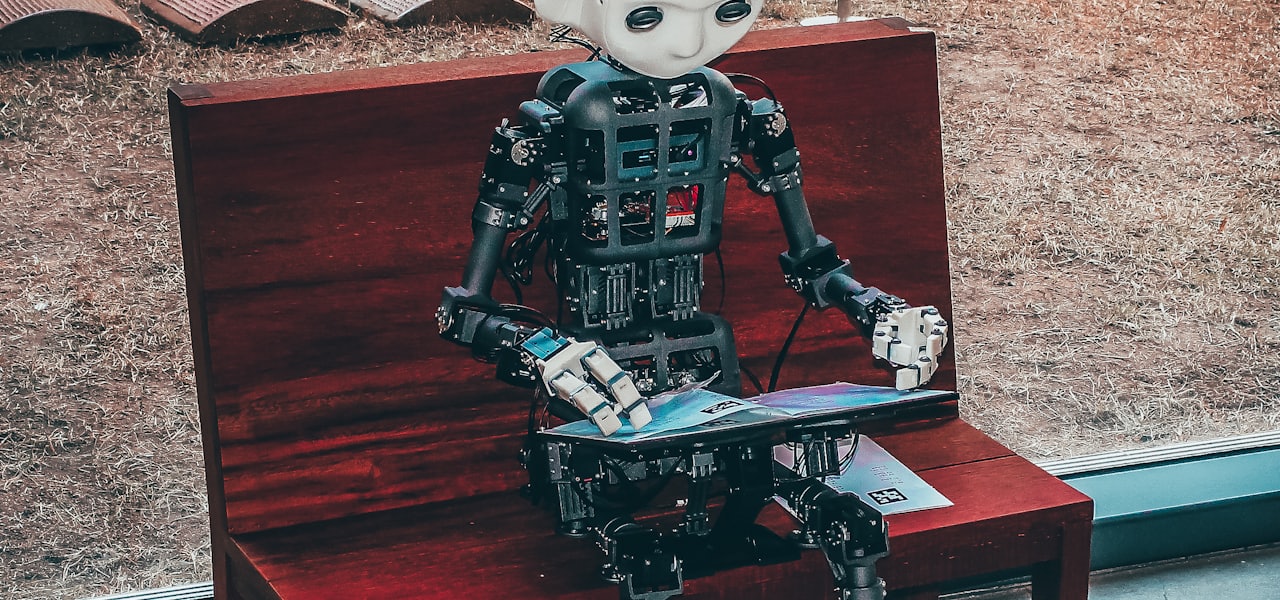
AI Overviews is an artificial intelligence (AI) feature integrated into Google Search that produces AI-generated summaries of search results. The feature has been criticized for its inaccuracy and for reducing website traffic. == History and development == AI Overviews were first introduced as part of Google's Search Generative Experience (SGE), which was unveiled at the Google I/O conference in May 2023. In May 2024 at Google I/O 2024, the feature was rebranded as AI Overviews and launched in the United States. The introduction of AI Overviews was seen as a strategic move to compete with other generative AI advancements, including OpenAI's ChatGPT. By August 2024, AI Overviews was rolled out to several other countries, including the United Kingdom, India, Japan, Brazil, Mexico, and Indonesia, with support for multiple languages. In October 2024, Google expanded the feature globally, making it available in over 100 countries. In December 2024, Botify x Demandsphere released findings stating that when AI Overviews and featured snippets appear together on the search engine results page, they take up approximately 67.1% of the screen on desktop and 75.7% on mobile. Even if content is ranking in the #1 position, it may not be visible to consumers if other visual elements on the results page are more prominent. In March 2025, Google started testing an "AI Mode", where the search results page is AI-generated. The company was also considering adding advertisements to the AI Mode, as they already exist in AI Overviews. As of May 2025, AI Overviews are available in over 200 countries and territories and in more than 40 languages. As of March 2026, Google AI Overviews appear on more than 48% of total Google Search queries, compared to just 6.49% in the previous year (58% year-over-year growth). == Functionality == The AI Overviews feature uses large language models to generate summaries from web content. The overviews are designed to be concise, providing a snapshot of relevant information about the queried topic. Google allows users to adjust the language complexity in summaries, offering both simplified and detailed options. The overviews also include links to sources. According to a June 2025 study by Semrush, the most cited source is Quora, followed by Reddit. == Reception == The feature has faced criticism for inaccuracies, including instances where erroneous or nonsensical content was generated. Depending on what is searched for, the overview may also consist of hallucinated content, such as when searching for idioms that do not exist. In May 2024, Google temporarily restricted the AI tool after it provided suggestions that were seen as nonsensical and harmful, such as telling users to eat rocks or apply glue on pizza. Concerns were also raised by content publishers, who feared a decline in web traffic as users relied on the summaries instead of visiting source websites. A Google patent from 2026 raised the concern of webmasters that Google could entirely replace the landing page of websites by an AI optimized copy of the website in its results. There is also apprehension about the ethical implications of AI-driven content aggregation, including its impact on intellectual property rights and the visibility of smaller content providers. The European Commission announced in December 2025 that they were investigating whether AI Overviews breached European competition law. In response, Google has stated its commitment to improve content validation and refine the algorithms used to filter unreliable information. Google implemented measures to prioritize link placement within AI Overviews, aiming to balance user convenience with the needs of content creators. In January 2026, Google restricted AI Overviews on certain health-related searches following an investigation by The Guardian. == Lawsuits == On February 24, 2025, Chegg sued Alphabet over the AI Overviews feature, claiming that it was leading to students preferring "low-quality, unverified AI summaries", thus violating antitrust law. Chegg also said it was considering either a sale or a take-private transaction. In September 2025, Penske Media Corporation, the publisher of Rolling Stone and The Hollywood Reporter, sued Google, claiming that AI Overviews illegally regurgitate content from their websites and drive off potential site visitors by always appearing on top of the search results while leaving little incentive to see the linked sources. The company stated that "the future of digital media and [...] its integrity [...] is threatened by Google's current actions", alleging that 20% of searches that link to Penske-owned websites show AI Overviews and that the figure is expected to rise. Google spokesperson José Castañeda called the claims "meritless" and stated that "AI Overviews send traffic to a greater diversity of sites." In 2026, Canadian musician Ashley MacIsaac filed a lawsuit against Google claiming that the AI Overview feature had wrongly stated that MacIsaac had been convicted of numerous criminal offences and was on the sex offender registry. He claims this incorrect information led to the cancellation of a December 2025 gig organized by the Sipekne'katik First Nation.
Sanchar Saathi
Sanchar Saathi (lit. 'Communication Partner' or 'Communication Companion') is an Indian state-owned app and web portal, operated by the Department of Telecommunications, designed to assist Indian mobile users in tracking and blocking stolen or lost mobile devices. In late 2025, a government order requiring Sanchar Saathi to be pre-installed on all mobile devices sold nationwide, with explicit provisions on preventing users from deleting the app or disabling any of its broad functionalities, triggered widespread backlash. The order was subsequently withdrawn. == Background == The Telecommunications Act 2023 introduced an exceptionally broad definition of the term "telecommunications" and conferred wide-ranging powers on the government. Although the Department of Telecommunications (DoT) assured reporters that this definition would not be used to justify government overreach, a November 2024 amendment to the Telecom Cyber Security Rules expanded it further and introduced the concept of the Telecommunication Identifier User Entity (TIEU), enabling users to be personally identified through their phone numbers. Sanchar Saathi was launched amid a widespread rise in cybercrime and hacking, as part of the Indian government's effort to prevent stolen phones from being used for fraud and to promote a state-backed application. In an official statement, the DoT said, "India has big second-hand mobile device market. Cases have also been observed where stolen or blacklisted devices are being re-sold. It makes the purchaser abettor in crime and causes financial loss to them." == Launch == Sanchar Saathi was originally launched as a web portal in May 2023. It was later launched as a mobile app in January 2025. Describing itself as a "citizen-centric" safety tool, Sanchar Saathi allows users to check a device's IMEI, report and block lost or stolen phones, and flag suspected fraud communications. Under Sanchar Saathi's privacy policy, it can make and manage phone calls, view and send messages, read call logs, access photos and files, access the location and camera of the device in which the app is used, as well as read and write into the device's storage. According to official government data, by December 2025, the Sanchar Saathi app had helped recover more than 700,000 lost and stolen mobile devices across India. Users report around 2,000 fraud incidents through the app each day. == Pre-installation controversy == On 28 November 2025, the Bharatiya Janata Party government, led by prime minister Narendra Modi, privately ordered phone manufacturers, including Apple, Samsung, Xiaomi, Vivo, Oppo, among others, to pre-install the Sanchar Saathi app on new devices sold in the country, alongside mandating that old devices get issued a software update for the installation of the app. The order had a 90-day deadline and further included explicit provisions to ensure that the app is to be "readily visible and accessible to the end users at the time of first use or device setup" and that users should neither be able to delete the app nor disable or restrict any of its broad functionalities. The order caused widespread political backlash. K. C. Venugopal, a general secretary of the main opposition party, the Indian National Congress (or simply the Congress), called the order "beyond unconstitutional" and said, "A pre-loaded government app that cannot be uninstalled is a dystopian tool to monitor every Indian. It is a means to watch over every movement, interaction and decision of each citizen", adding, "Big Brother cannot watch us." Another Congress general secretary, Priyanka Gandhi, termed Sanchar Saathi a "snooping app", and attacked the government for "turning this country into a dictatorship". Uddhav Thackeray, former chief minister of Maharashtra, compared Sanchar Saathi to the Pegasus spyware. Sanjay Hegde, a senior advocate at the Supreme Court of India, said "Here in the garb of security, the intrusion is vast, unfettered, unguided and is totally disproportionate. The app ought to be struck down on that account". The Internet Freedom Foundation (IFF), an Indian digital rights advocacy organisation, said, "Forcing every smartphone to carry a permanent government app for a simple verification task is excessive and violates the Puttaswamy proportionality standard", referring to Puttaswamy v. Union of India, a 2017 landmark decision of the Supreme Court, which asserted that the right to privacy should be protected as a fundamental right. The IFF further said, "For this to work in practice, the app will almost certainly need system level or root level access, similar to carrier or OEM system apps, so that it cannot be disabled. That design choice erodes the protections that normally prevent one app from peering into the data of others, and turns Sanchar Saathi into a permanent, non-consensual point of access sitting inside the operating system of every Indian smartphone user." Moreover, the organisation said that while the app was being "framed as a benign IMEI checker", a server-side update could allow the app to engage in "client side scanning for 'banned' applications, flag VPN usage, correlate SIM activity, or trawl SMS logs in the name of fraud detection. Nothing in the order constrains these possibilities." In reaction to the controversy, Jyotiraditya Scindia, the union minister of communications, said, "There is no snooping or call monitoring", adding, "Obviously you can delete it. There is no problem. This is a matter of customer protection. It is not mandatory. If you don't want to register, and don't want to use the app, don't use it; don't register, and it will lay dormant." Scindia compared the app to other pre-installed mobile apps such as Google Maps, which he said could be deleted if users wished so. However, contrary to Scindia's statement, on many phone brands, such pre-installed apps cannot be deleted, although users can disable them. Furthermore, upon enquiry, Scindia did not clarify whether his remarks applied to the app after the order took effect, making no comment on the provision in the order that would prevent users from deleting the app. When Congress member Renuka Chowdhury submitted an adjournment motion notice in the Rajya Sabha seeking the suspension of all other matters to discuss the Sanchar Saathi issue, Kiren Rijiju, the union minister of parliamentary affairs, accused the opposition of "manufacturing issues" to stall session proceedings. By 2 December, it had been reported that Apple did not plan to comply with the order, citing privacy and security concerns for the iOS ecosystem and the fact that the order would violate its internal policy against the pre-installation of third-party software in iPhones. Although it was clarified that Apple did not intend to take the matter to court or publicly oppose the government, it was said that Apple "can't do this. Period." The order would have also required Google to create a custom version of Android solely for India which would include the Sanchar Saathi app, a requirement described to "not be acceptable to the company". Following the backlash, the order was revoked on 3 December 2025. In a press release, the government said, "Given Sanchar Saathi's increasing acceptance, Government has decided not to make the pre-installation mandatory for mobile manufacturers".
User modeling
User modeling is the subdivision of human–computer interaction which describes the process of building up and modifying a conceptual understanding of the user. The main goal of user modeling is customization and adaptation of systems to the user's specific needs. The system needs to "say the 'right' thing at the 'right' time in the 'right' way". To do so it needs an internal representation of the user. Another common purpose is modeling specific kinds of users, including modeling of their skills and declarative knowledge, for use in automatic software-tests. User-models can thus serve as a cheaper alternative to user testing but should not replace user testing. == Background == A user model is the collection and categorization of personal data associated with a specific user. A user model is a (data) structure that is used to capture certain characteristics about an individual user, and a user profile is the actual representation in a given user model. The process of obtaining the user profile is called user modeling. Therefore, it is the basis for any adaptive changes to the system's behavior. Which data is included in the model depends on the purpose of the application. It can include personal information such as users' names and ages, their interests, their skills and knowledge, their goals and plans, their preferences and their dislikes or data about their behavior and their interactions with the system. There are different design patterns for user models, though often a mixture of them is used. Static user models Static user models are the most basic kinds of user models. Once the main data is gathered they are normally not changed again, they are static. Shifts in users' preferences are not registered and no learning algorithms are used to alter the model. Dynamic user models Dynamic user models allow a more up to date representation of users. Changes in their interests, their learning progress or interactions with the system are noticed and influence the user models. The models can thus be updated and take the current needs and goals of the users into account. Stereotype based user models Stereotype based user models are based on demographic statistics. Based on the gathered information users are classified into common stereotypes. The system then adapts to this stereotype. The application therefore can make assumptions about a user even though there might be no data about that specific area, because demographic studies have shown that other users in this stereotype have the same characteristics. Thus, stereotype based user models mainly rely on statistics and do not take into account that personal attributes might not match the stereotype. However, they allow predictions about a user even if there is rather little information about him or her. Highly adaptive user models Highly adaptive user models try to represent one particular user and therefore allow a very high adaptivity of the system. In contrast to stereotype based user models they do not rely on demographic statistics but aim to find a specific solution for each user. Although users can take great benefit from this high adaptivity, this kind of model needs to gather a lot of information first. == Data gathering == Information about users can be gathered in several ways. There are three main methods: Asking for specific facts while (first) interacting with the system Mostly this kind of data gathering is linked with the registration process. While registering users are asked for specific facts, their likes and dislikes and their needs. Often the given answers can be altered afterwards. Learning users' preferences by observing and interpreting their interactions with the system In this case users are not asked directly for their personal data and preferences, but this information is derived from their behavior while interacting with the system. The ways they choose to accomplish a tasks, the combination of things they takes interest in, these observations allow inferences about a specific user. The application dynamically learns from observing these interactions. Different machine learning algorithms may be used to accomplish this task. A hybrid approach which asks for explicit feedback and alters the user model by adaptive learning This approach is a mixture of the ones above. Users have to answer specific questions and give explicit feedback. Furthermore, their interactions with the system are observed and the derived information are used to automatically adjust the user models. Though the first method is a good way to quickly collect main data it lacks the ability to automatically adapt to shifts in users' interests. It depends on the users' readiness to give information and it is unlikely that they are going to edit their answers once the registration process is finished. Therefore, there is a high likelihood that the user models are not up to date. However, this first method allows the users to have full control over the collected data about them. It is their decision which information they are willing to provide. This possibility is missing in the second method. Adaptive changes in a system that learns users' preferences and needs only by interpreting their behavior might appear a bit opaque to the users, because they cannot fully understand and reconstruct why the system behaves the way it does. Moreover, the system is forced to collect a certain amount of data before it is able to predict the users' needs with the required accuracy. Therefore, it takes a certain learning time before a user can benefit from adaptive changes. However, afterwards these automatically adjusted user models allow a quite accurate adaptivity of the system. The hybrid approach tries to combine the advantages of both methods. Through collecting data by directly asking its users it gathers a first stock of information which can be used for adaptive changes. By learning from the users' interactions it can adjust the user models and reach more accuracy. Yet, the designer of the system has to decide, which of these information should have which amount of influence and what to do with learned data that contradicts some of the information given by a user. == System adaptation == Once a system has gathered information about a user it can evaluate that data by preset analytical algorithm and then start to adapt to the user's needs. These adaptations may concern every aspect of the system's behavior and depend on the system's purpose. Information and functions can be presented according to the user's interests, knowledge or goals by displaying only relevant features, hiding information the user does not need, making proposals what to do next and so on. One has to distinguish between adaptive and adaptable systems. In an adaptable system the user can manually change the system's appearance, behavior or functionality by actively selecting the corresponding options. Afterwards the system will stick to these choices. In an adaptive system a dynamic adaption to the user is automatically performed by the system itself, based on the built user model. Thus, an adaptive system needs ways to interpret information about the user in order to make these adaptations. One way to accomplish this task is implementing rule-based filtering. In this case a set of IF... THEN... rules is established that covers the knowledge base of the system. The IF-conditions can check for specific user-information and if they match the THEN-branch is performed which is responsible for the adaptive changes. Another approach is based on collaborative filtering. In this case information about a user is compared to that of other users of the same systems. Thus, if characteristics of the current user match those of another, the system can make assumptions about the current user by presuming that he or she is likely to have similar characteristics in areas where the model of the current user is lacking data. Based on these assumption the system then can perform adaptive changes. == Usages == Adaptive hypermedia: In an adaptive hypermedia system the displayed content and the offered hyperlinks are chosen on basis of users' specific characteristics, taking their goals, interests, knowledge and abilities into account. Thus, an adaptive hypermedia system aims to reduce the "lost in hyperspace" syndrome by presenting only relevant information. Adaptive educational hypermedia: Being a subdivision of adaptive hypermedia the main focus of adaptive educational hypermedia lies on education, displaying content and hyperlinks corresponding to the user's knowledge on the field of study. Intelligent tutoring system: Unlike adaptive educational hypermedia systems intelligent tutoring systems are stand-alone systems. Their aim is to help students in a specific field of study. To do so, they build up a user model where they store information about abilities, knowledge and needs of the user. The system can now adapt to this user by presenting approp
Jess (programming language)
Jess is a rule engine for the Java computing platform, written in the Java programming language. It was developed by Ernest Friedman-Hill of Sandia National Laboratories. It is a superset of the CLIPS language. It was first written in late 1995. The language provides rule-based programming for the automation of an expert system, and is often termed as an expert system shell. In recent years, intelligent agent systems have also developed, which depend on a similar ability. Rather than a procedural paradigm, where one program has a loop that is activated only one time, the declarative paradigm used by Jess applies a set of rules to a set of facts continuously by a process named pattern matching. Rules can modify the set of facts, or can execute any Java code. It uses the Rete algorithm to execute rules. == License == The licensing for Jess is freeware for education and government use, and is proprietary software, needing a license, for commercial use. In contrast, CLIPS, which is the basis and starting code for Jess, is free and open-source software. == Code examples == Code examples: Sample code:
TD-Gammon
TD-Gammon is a computer backgammon program developed in the 1990s by Gerald Tesauro at IBM's Thomas J. Watson Research Center. Its name comes from the fact that it is an artificial neural net trained by a form of temporal-difference learning, specifically TD-Lambda. It explored strategies that humans had not pursued and led to advances in the theory of correct backgammon play. In 1993, TD-Gammon (version 2.1) was trained with 1.5 million games of self-play, and achieved a level of play just slightly below that of the top human backgammon players of the time. In 1998, during a 100-game series, it was defeated by the world champion by a mere margin of 8 points. Its unconventional assessment of some opening strategies had been accepted and adopted by expert players. TD-gammon is commonly cited as an early success of reinforcement learning and neural networks, and was cited in, for example, papers for deep Q-learning and AlphaGo. == Algorithm for play and learning == During play, TD-Gammon examines on each turn all possible legal moves and all their possible responses (lookahead search), feeds each resulting board position into its evaluation function, and chooses the move that leads to the board position that got the highest score. In this respect, TD-Gammon is no different than almost any other computer board-game program. TD-Gammon's innovation was in how it learned its evaluation function. TD-Gammon's learning algorithm consists of updating the weights in its neural net after each turn to reduce the difference between its evaluation of previous turns' board positions and its evaluation of the present turn's board position—hence "temporal-difference learning". The score of any board position is a set of four numbers reflecting the program's estimate of the likelihood of each possible game result: White wins normally, Black wins normally, White wins a gammon, Black wins a gammon. For the final board position of the game, the algorithm compares with the actual result of the game rather than its own evaluation of the board position. The core of TD-gammon is a neural network with 3 layers. The input layer has two types of neurons. One type codes for the board position. They are non-negative integers ranging from 0 to 15, indicating the number of White or Black checkers at each board location. There are 99 input neurons for each, totaling 198 neurons. Another type codes for hand-crafted features previously used in Neurogammon. These features encoded standard concepts used by human experts, such as "advanced anchor," "blockade strength," "home board strength" and the probability of a "blot" (single checker) being hit. The hidden layer contains hidden neurons. Later versions had more of these. The output layer contains 4 neurons, representing the network's estimate of the probability ("equity") that the current board would lead to. The 4 neurons code for: White normal win, White gammon win, Black normal win, Black gammon win. Backgammon win is so rare that Tesauro opted to not represent it. After each turn, the learning algorithm updates each weight in the neural net according to the following rule: w t + 1 − w t = α ( Y t + 1 − Y t ) ∑ k = 1 t λ t − k ∇ w Y k {\displaystyle w_{t+1}-w_{t}=\alpha (Y_{t+1}-Y_{t})\sum _{k=1}^{t}\lambda ^{t-k}\nabla _{w}Y_{k}} where: It was found that picking small λ {\displaystyle \lambda } offered performance roughly equally good, and large λ {\displaystyle \lambda } degraded performance. Because of this, after 1992, TD-Gammon was trained with λ = 0 {\displaystyle \lambda =0} , degenerating into standard TD-learning. This saved compute by a factor of 2. == Development history == Version 1.0 used simple 1-ply search: every next move is scored by the neural net, and the highest-scoring move is selected. Versions 2.0 and 2.1 used 2-ply search: Make a 1-ply analysis to remove unlikely moves ("forward pruning"). Make a 2-play minimax analysis for only the likely moves. Pick the best move, probability-weighted by each of the opponent's 21 possible dice rolls (weighting non-doubles twice as much as doubles). Versions 3.0 and 3.1 used 3-ply search, using 21 2 = 441 {\displaystyle 21^{2}=441} possible dice rolls instead of 21. The last version, 3.1, was trained specifically for an exhibition match against Malcolm Davis at the 1998 AAAI Hall of Champions. It lost at -8 points, mainly due to one blunder, where TD-Gammon opted to double and got gammoned at -32 points. == Experiments and stages of training == Unlike previous neural-net backgammon programs such as Neurogammon (also written by Tesauro), where an expert trained the program by supplying the "correct" evaluation of each position, TD-Gammon was at first programmed "knowledge-free". In early experimentation, using only a raw board encoding with no human-designed features, TD-Gammon reached a level of play comparable to Neurogammon: that of an intermediate-level human backgammon player. Even though TD-Gammon discovered insightful features on its own, Tesauro wondered if its play could be improved by using hand-designed features like Neurogammon's. Indeed, the self-training TD-Gammon with expert-designed features soon surpassed all previous computer backgammon programs. It stopped improving after about 1,500,000 games (self-play) using a three-layered neural network, with 198 input units encoding expert-designed features, 80 hidden units, and one output unit representing predicted probability of winning. == Advances in backgammon theory == TD-Gammon's exclusive training through self-play (rather than imitation learning) enabled it to explore strategies that humans previously had not considered or had ruled out erroneously. Its success with unorthodox strategies had a significant impact on the backgammon community. Late 1991, Bill Robertie, Paul Magriel, and Malcolm Davis, were invited to play against TD-Gammon (version 1.0). A total of 51 games were played, with TD-Gammon losing at -0.25 ppg. Robertie found TD-Gammon to be at the level of a competent advanced player, and better than any previous backgammon program. Robertie subsequently wrote about the use of TD-Gammon for backgammon study. For example, on the opening play, the conventional wisdom was that given a roll of 2-1, 4-1, or 5-1, White should move a single checker from point 6 to point 5. Known as "slotting", this technique trades the risk of a hit for the opportunity to develop an aggressive position. TD-Gammon found that the more conservative play of splitting 24-23 was superior. Tournament players began experimenting with TD-Gammon's move, and found success. Within a few years, slotting had disappeared from tournament play, replaced by splitting, though in 2006 it made a reappearance for 2-1. Backgammon expert Kit Woolsey found that TD-Gammon's positional judgement, especially its weighing of risk against safety, was superior to his own or any human's. TD-Gammon's excellent positional play was undercut by occasional poor endgame play. The endgame requires a more analytical approach, sometimes with extensive lookahead. TD-Gammon's limitation to two-ply lookahead put a ceiling on what it could achieve in this part of the game. TD-Gammon's strengths and weaknesses were the opposite of symbolic artificial intelligence programs and most computer software in general: it was good at matters that require an intuitive "feel" but bad at systematic analysis. It is also poor at doubling strategies. This is likely due to the fact that the neural network is trained without the doubling cube, with the doubling added by feeding the neural network's cubeless equity estimates into theoretically-based heuristic formulae. This was particularly the case in the 1998 exhibition match, where it played 100 games against Malcolm Davis. A single doubling blunder lost the match. TD-gammon was never commercialized or released to the public in some other form, but it inspired commercial backgammon programs based on neural networks, such as JellyFish (1994) and Snowie (1998).
Amira (software)
Amira (ah-MEER-ah) is a software platform for visualization, processing, and analysis of 3D and 4D data. It is being actively developed by Thermo Fisher Scientific in collaboration with the Zuse Institute Berlin (ZIB), and commercially distributed by Thermo Fisher Scientific — together with its sister software Avizo. == Overview == Amira is an extendable software system for scientific visualization, data analysis, and presentation of 3D and 4D data. It is used by researchers and engineers in academia and industry. It is a tool for processing, analysis and visualization of data from various modalities; e.g. micro-CT, PET, Ultrasound. It is used in many fields, such as microscopy in biology and materials science, molecular biology, quantum physics, astrophysics, computational fluid dynamics (CFD), finite element modeling (FEM), non-destructive testing (NDT), and many more. One of the key features, besides data visualization, is Amira's set of tools for image segmentation and geometry reconstruction. This allows the user to mark (or segment) structures and regions of interest in 3D image volumes using automatic, semi-automatic, and manual tools. The segmentation can then be used for a variety of subsequent tasks, such as volumetric analysis, density analysis, shape analysis, or the generation of 3D computer models for visualization, numerical simulations, or rapid prototyping or 3D printing. Other key Amira features are multi-planar and volume visualization, image registration, filament tracing, cell separation and analysis, tetrahedral mesh generation, fiber-tracking from diffusion tensor imaging (DTI) data, skeletonization, spatial graph analysis, and stereoscopic rendering of 3D data over multiple displays and immersive virtual reality environments, including CAVEs. As a commercial product Amira requires the purchase of a license or an academic subscription. A time-limited, but full-featured evaluation version is available for download free of charge. == History == === 1993–1998: Research software === Amira's roots go back to 1993 and the Department for Scientific Visualization, headed by Hans-Christian Hege at the Zuse Institute Berlin (ZIB). The ZIB is a research institute for mathematics and informatics. The Scientific Visualization department's mission is to help solve computationally and scientifically challenging tasks in medicine, biology, engineering and materials science. For this purpose, it develops algorithms and software for 2D, 3D, and 4D data visualization and visually supported exploration and analysis. At that time, the young visualization group at the ZIB had experience with the extendable, data flow-oriented visualization environments apE, IRIS Explorer, and Advanced Visualization Studio (AVS), but was not satisfied with these products' interactivity, flexibility, and ease-of-use for non-computer scientists. Therefore, the development of a new software system was started in a research project within a medically oriented, multi-disciplinary collaborative research center. Based on experiences that Tobias Höllerer had gained in late 1993 with the new graphics library IRIS Inventor, it was decided to utilize that library. The development of the medical planning system was performed by Detlev Stalling, who later became the chief software architect of Amira. The new software was called "HyperPlan", highlighting its initial target application – a planning system for hyperthermia cancer treatment. The system was being developed on Silicon Graphics (SGI) computers, which at the time were the standard workstations used for high-end graphics computing. The software was based on libraries such as OpenGL (originally IRIS GL), Open Inventor (originally IRIS Inventor), and the graphical user interface libraries X11, Motif (software), and ViewKit. In 1998, X11/Motif/Viewkit were replaced by the Qt toolkit. The HyperPlan framework served as the base for more and more projects at the ZIB and was used by a growing number of researchers in collaborating institutions. The projects included applications in medical image computing, medical visualization, neurobiology, confocal microscopy, flow visualization, molecular analytics and computational astrophysics. === 1998–today: Commercially supported product === The growing number of users of the system started to exceed the capacities that ZIB could spare for software distribution and support, as ZIB's primary mission was algorithmic research. Therefore, the spin-off company Indeed – Visual Concepts GmbH was founded by Hans-Christian Hege, Detlev Stalling, and Malte Westerhoff. In Feb 1998 the HyperPlan software was given the new, application-neutral name "Amira". This name is not an acronym, but was chosen for being pronounceable in different languages and providing a suitable connotation, namely "to look at" or "to wonder at", from the Latin verb "admirare" (to admire), which reflects a basic situation in data visualization. A major re-design of the software was undertaken by Detlev Stalling and Malte Westerhoff in order to make it a commercially supportable product and to make it available on non-SGI computers as well. In March 1999, the first version of the commercial Amira was exhibited at the CeBIT tradeshow in Hannover, Germany on SGI IRIX and Hewlett-Packard UniX (HP-UX) booths. Versions for Linux and Microsoft Windows followed within the following twelve months. Later Mac OS X support was added. Indeed – Visual Concepts GmbH selected the Bordeaux, France and San Diego, United States based company TGS, Inc. as the worldwide distributor for Amira and completed five major releases (up to version 3.1) in the subsequent four years. In 2003 both Indeed – Visual Concepts GmbH, as well as TGS, Inc. were acquired by Massachusetts-based Mercury Computer Systems, Inc. (NASDAQ:MRCY) and became part of Mercury's newly formed life sciences business unit, later branded Visage Imaging. In 2009, Mercury Computer Systems, Inc. spun off Visage Imaging again and sold it to Melbourne, Australia based Promedicus Ltd (ASX:PME), a leading provider of radiology information systems and medical IT solutions. During this time, Amira continued to be developed in Berlin, Germany and in close collaboration with the ZIB, still headed by the original creators of Amira. TGS, located in Bordeaux, France was sold by Mercury Computer systems to a French investor and renamed to Visualization Sciences Group (VSG). VSG continued the work on a complementary product named Avizo, based on the same source code but customized for material sciences. In August 2012, FEI, to that date the largest OEM reseller of Amira, purchased VSG and the Amira business from Promedicus. This brought the two software sisters Amira and Avizo back into one hand. In August 2013, Visualization Sciences Group (VSG) became a business unit of FEI. In 2016 FEI has been bought by Thermo Fisher Scientific and became part of its Materials & Structural Analysis division in early 2017. Amira and Avizo are still being marketed as two different products; Amira for life sciences and Avizo for materials science, but the development efforts are now joined once again. In the meantime, the number of scientific articles using the Amira / Avizo software, is in the order of 10 thousands. == Amira options == === Microscopy option === Specific readers for microscopy data Image deconvolution Exploration of 3D imagery obtained from virtually any microscope Extraction and editing of filament networks from microscopy images === DICOM reader === Import of clinical and preclinical data in DICOM format === Mesh option === Generation of 3D finite element (FE) meshes from segmented image data Support for many state-of-the-art FE solver formats High-quality visualization of simulation mesh-based results, using scalar, vector, and tensor field display modules === Skeletonization option === Reconstruction and analysis of neural and vascular networks Visualization of skeletonized networks Length and diameter quantification of network segments Ordering of segments in a tree graph Skeletonization of very large image stacks === Molecular option === Advanced tools for the visualization of molecule models Hardware-accelerated volume rendering Powerful molecule editor Specific tools for complex molecular visualization === Developer option === Creation of new custom components for visualizing or data processing Implementation of new file readers or writers C++ programming language Development wizard for getting started quickly === Neuro option === Medical image analysis for DTI and brain perfusion Fiber tracking supporting several stream-line based algorithms Fiber separation into fiber bundles based on user defined source and destination regions Computation of tensor fields, diffusion weighted maps Eigenvalue decomposition of tensor fields Computation of mean transit time, cerebral blood flow, and cerebral blood volume === VR option === Visualization of data on large tiled displays
Protégé (software)
Protégé is a free, open source ontology editor and a knowledge management system. The Protégé meta-tool was first built by Mark Musen in 1987 and has since been developed by a team at Stanford University. The software is the most popular and widely used ontology editor in the world. == Overview == Protégé provides a graphical user interface to define ontologies. It also includes deductive classifiers to validate that models are consistent and to infer new information based on the analysis of an ontology. Like Eclipse, Protégé is a framework for which various other projects suggest plugins. This application is written in Java and makes heavy use of Swing to create the user interface. According to their website, there are over 300,000 registered users. A 2009 book calls it "the leading ontological engineering tool". Protégé is developed at Stanford University and is made available under the BSD 2-clause license. Earlier versions of the tool were developed in collaboration with the University of Manchester.